Introduction
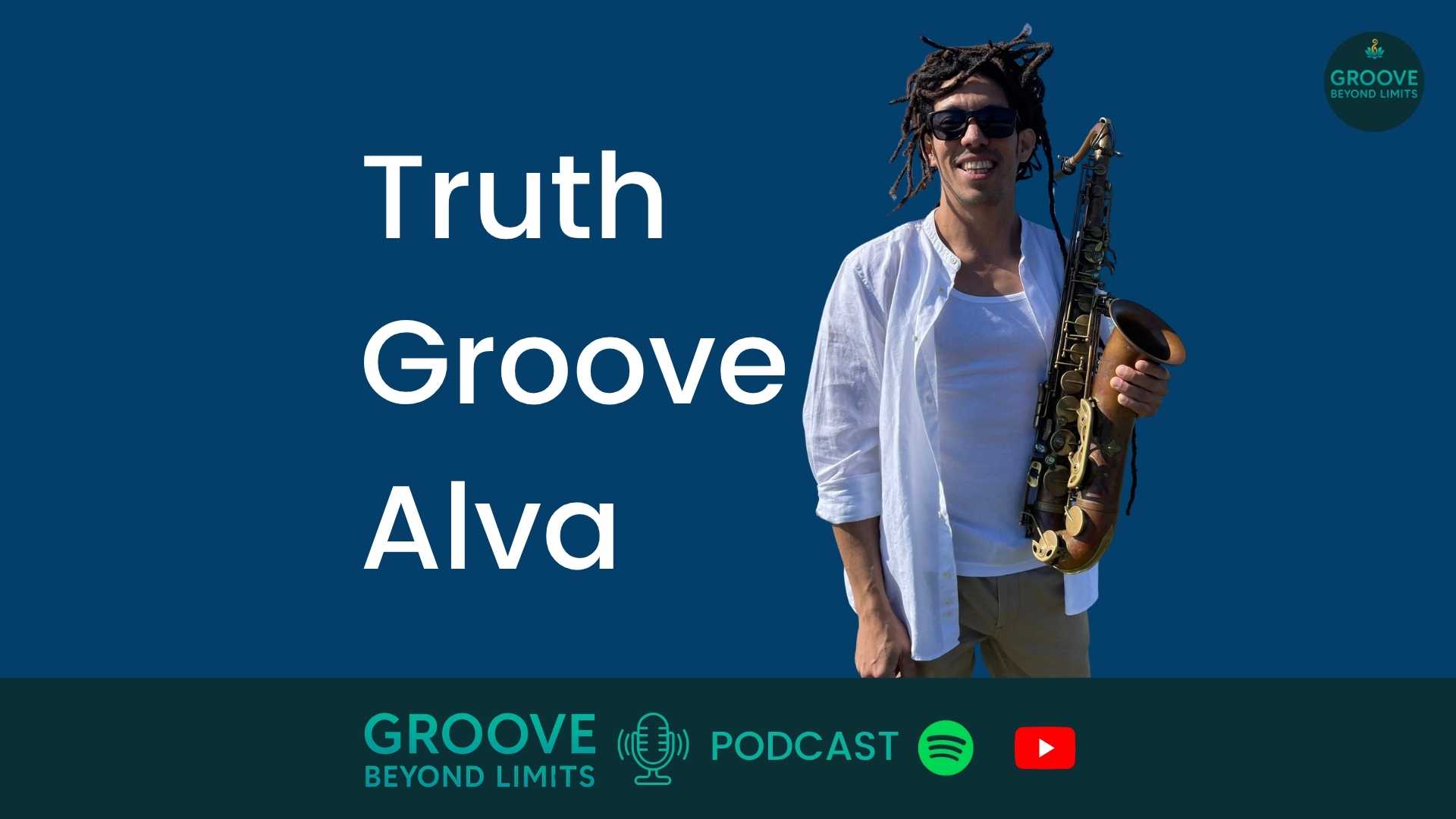
In this captivating new episode of “Groove Beyond Limits,” we have the honor of welcoming Kevin Alva, an exceptional musician whose journey is a true sonic odyssey.
Saxophonist, singer, composer, and deeply passionate about reggae and ska, Kevin opens the doors to his universe, blending his Venezuelan roots with a profound and inspiring artistic vision.
Get ready to dive into an authentic conversation where music becomes a universal language, a vehicle for emotions, and a powerful means of human connection.
This unique episode invites you to listen beyond the notes, to feel the message, and to discover the strength of an artist who puts his heart into every melody.
Who is Kevin Alva? A Multifaceted Groove
Born in France but raised in Venezuela, Kevin Alva embodies a vibrant cultural mix.
His passion for reggae and ska, deeply rooted in his heart, has guided his entire life. Far from clichés, he explains how this music, very popular in Venezuela, became an integral part of his identity.
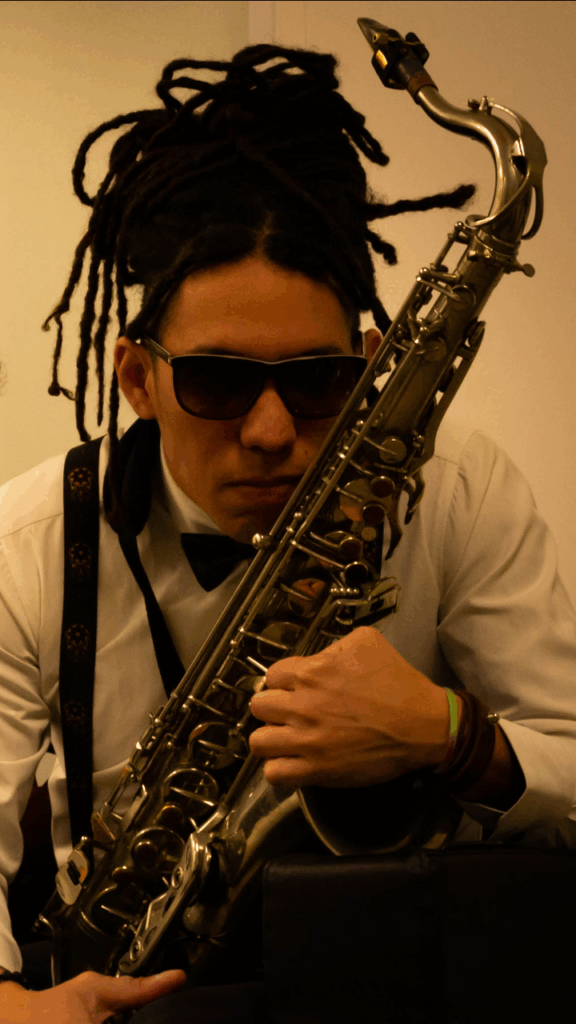
Kevin isn’t just a virtuosic saxophonist; he’s a complete musician: composer, singer, guitarist, bassist, and even producer.
He cultivates this versatility with almost military discipline, dedicating his time to learning various instruments and creating his own pieces. His goal isn’t to become the “best” musician, but rather to share his truth through his music.
I’m a musician from Venezuela.
I play the saxophone, I sing a little bit, and I’m 100% into reggae and ska music.
I’m not from Jamaica, but this music was and is still very popular in my country, so it’s in my heart.
Even though I was born in Bordeaux, France, because my parents were studying there, both of them are from Venezuela. I was raised there, and my heritage, my music, and my entire environment are from there.
What Drives Kevin Alva’s Creative Discipline?
Music is my life and my occupation; I’m 100% connected with it.
I’m very slow in the morning, so I need to start my day in a super cool way: breakfast, then immediately music.
The Military Precision of a Versatile Musician
My main instrument is the saxophone, but I’m not focusing 100% on it because I want to do many other things.
When you want to do more things, it takes time away from being a “super killer” saxophone player. Why?
Because I’m a composer, I have songs and a couple of albums already, and I want to sing, play guitar, and I love to play bass.
To be a good musician in all these areas, you have to invest a lot of time. Every minute you invest in the saxophone takes time from your voice, keys, or production.
When you want to do a lot of things, you need to be very precise, like a military school. I need to structure my day: a little saxophone in the morning, then singing, then checking lyrics.
This way, I’m done with all my tasks by the beginning of the afternoon.
The Goal Beyond Virtuosity: Sharing Truth and Love
My goal isn’t to be a killer player.
My goal is to show people how life is. In my music, both instrumental and lyrical, I send a message. Instrumental music can also convey a message, expressions, or emotions without lyrics.
I want to show people what it’s like to live with music, the struggles and the love. I want to show something positive. I don’t just want to tell you to “shake your ass” and dance, even though everyone loves to dance. For me, that’s not the goal.
I need to say how I feel. Even if I’m singing in Spanish, which is my native language, if the message is real, straight, and true, people will connect with it. I know I’m on the right path when people tell me they didn’t understand the words but connected with the message.
From Venezuela to Tallinn: Overcoming Cultural Barriers
I travel a lot with music, always in different countries. Long story short: I met a girl from Latvia in Buenos Aires, where I was living
The Venezuelan Music Fight: Talent and Competition
In America, and I mean all of America, you have to fight.
There’s a lot of talent, a huge number of people, and many playing the same music. It’s a real fight to find a gig, maintain a residence, and then fight for another gig.
My approach to music there was different; I was always focusing solely on performing
Why is Reggae and Ska Community Closed in Tallinn?
My relationship with the girl didn’t work, but I kept doing music. I was passing through
Estonia because Latvia is a neighbor country. Estonia opened its doors to me, telling me to stay here.
At first, I didn’t want to be here; I preferred to be in other countries, like Germany, where I have a good friend, and we play and love the same music.
Here, I don’t have even one person who shares my exact musical tastes. For example, the type of salsa I like is not Cuban, and the few guys playing that music here are from Cuba, it’s different.
The reggae scene is very closed. I was trying to connect all the DJs and bands, but nobody wanted to; they are super closed.
Trauma Heritage and the Baltic Weather
This closed nature might come from self-defense. It’s a country that has suffered a lot of invasions from empires over centuries. This is a trauma heritage.
You also have the weather; when it’s minus 40, minus 30, it affects people. But even if the heritage and the body memorize the trauma, it’s a choice to go beyond that.
Despite the resistance, I’m working to integrate the people with the music I love. This is an opportunity to create a movement. I’m finding a way.
Kevin Alva’s Philosophy: Music as a Real Family and Connection
For me, the most important and valuable thing I was able to do is the family and the growing of the family through music.
The Essential Role of the Tribe in Music
When you have family support with music, you’re going to be strong and alive forever. It’s not like the companies that say, “We are a family,” which is BS. This is about real collaboration.
It’s about maturity, about not having to show anything.
You need to let the other person express themselves, and then you do the same, like in a conversation. In music, it works the exact same way.
If you start, I’ll try to follow you, but when it’s my turn, be the same.
If you are comfortable in C minor, I’ll do that for you. Are you safe? Okay, let’s have fun.
We don’t need to show off.
We are stronger than one. If we are two, we are stronger than one.
If we can involve the people in the room, we are not three, we are one, a cycle, a community.
Richard Bona and Victor Wooten: The Inspiration, Not the Copy
You don’t need to be Richard Bona or Victor Wooten.
They already exist, you can check them.
Take inspiration, don’t copy. The idea is to integrate. You are a very good bassist; let’s try to make something to understand if we can. Then we are spreading the message through your people and through mine.
Key Lesson: What is the Secret to Success and Impact?
I learned that if I put my 100% into the music, I’m going to have results. That’s why I’m 100% with the music. Also, you need to move your body and do exercises.
I have the same passion for sports as I do for music; if we play, I’ll put my 100%.
The Manuel Barrios Method: 100% Effort or Nothing
A person who had a profound impact on me is my saxophone teacher from Venezuela,
Manuel Barrios. He’s one of the best saxophone players from my country, but I feel he’s a better person than a musician.
His approach was: “If you don’t want to work and study, it’s okay. Let’s go and eat something”. He was saying, in a super nice way, “If you want to be better, study. If you don’t, just do something else”. When I started to put my 100%, everything changed.
I felt more comfortable with the saxophone and with my voice. The approach was: you don’t want it, don’t do it, but if you’re going to do it, put an effort.
The Value of Original Music Over Covers
In my country, the ska and reggae movement was huge in the ’90s. The most important thing I loved was that everybody was doing their own music. It wasn’t 100 bands of covers. The cover bands, right now, are killing the movement.
How to Change the World with Music? The Message Over the Beat
I feel that nowadays, the world doesn’t want to make culture grow. If you cut the culture, you kill the society. They want to kill the arts. It’s very hard to make a living with music; you need to fight to survive.
The Problem with “Selling Shit” and Bad Education
They are trying to sell shit, and the people are consuming it, and the worst part is they like it. This is because of bad education.
You think Maxima or Lidl are the best because you only know that. But then someone brings you a good croissant, and it’s like an opening to an entire different world.
For me, the message is more important than the music itself or the appearance. Sometimes a cake looks ugly, but it’s the best because of the texture or the flavor.
The message is what we transmit. That’s why I’m always trying to give a message with my music. I feel like this is my task, I must do this.
The Latin-African Heritage in Venezuelan Drums
The African people were forced to be slaves in Venezuela, but they brought the music.
The music is in my face, in my genes.
We have a lot of drums from Africa, blended with our music, our natives, and the Europeans who were conquering our country.
This is so beautiful and amazing that I try to put it into my shows. I can make people dance without playing the obvious reguetón or Gasolina.
You just need to check what the people need, how you can make them move. You can make them dance by telling them, “Hey, we’re running out of water, but dance”.
You’re just throwing a hook. Some people will come back and say, “That lyric you were saying…”.
What is Kevin Alva’s main goal as a musician?
Kevin Alva’s goal is not to be the ‘best’ or a ‘super killer’ player, but rather to use his music (both lyrical and instrumental) as a vehicle to share his truth, his struggles, and the love he has for life. He focuses on conveying a real, straight, and true message that connects with people, regardless of language.
How does Kevin Alva approach his versatility as a multi-instrumentalist?
As a composer, singer, guitarist, and saxophonist, Kevin Alva applies 'military precision' to his daily routine. He segments his time rigorously to ensure 100% effort is dedicated to each task (saxophone, writing, singing) without letting the pursuit of versatility dilute his quality.
Who was Kevin Alva’s most influential teacher and what was his philosophy?
Kevin Alva credits his saxophone teacher, Manuel Barrios, as his most influential mentor. Barrios’ philosophy was simple: ‘If you want to be better, study. If you don’t want to be better, just do something else.’ This pushed Kevin to always put 100% effort into his work.
Podcast: Play in new window | Download